
- Inicio
- En recuerdo de nuestros compañeros
- Tributo a Alfred Bennett Jenson
Tribute to Alfred Bennett Jenson
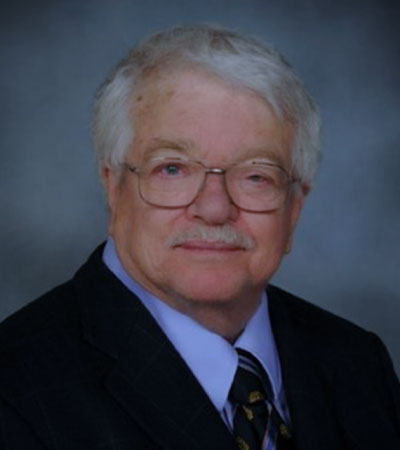
Dr. ALFRED BENNETT JENSON, MD
1939-2019
Pathologist, papillomavirus immunologist and co-inventor of the HPV vaccine
| Sorrowfully, A. Bennett Jenson MD died unexpectedly at home on December 23, 2019. He was 80 years old Bennett was one of the earliest medical scientists to explore the host immune response to papillomaviruses and to correlate viral protein structure with the induction of host immunity. He had an extensive background in pathology, immunology and virology and, coupled with his unique and often humorous personality, he became an unforgettable and vital component of the papillomavirus community. Bennett received his MD degree in 1966 from Baylor College of Medicine where he remained to complete an internship in Medicine and residency in Pathology. He stayed at Baylor as an Instructor in Pathology working and publishing with Joseph Melnick on hepatitis, rabies, and herpes viruses. Following a short term in the US Army Reserve as a pathologist in the Veterinary Medicine Branch, he took a position as a Research Associate in Immunopathology at Scripps Clinic and Research Foundation working with Frank Dixon studying murine leukemia virus. From Scripps he moved to the National Institute of Dental Research, NIH, to continue his virology/pathology research with Abner Notkins analyzing mumps virus, reovirus, and coxsackie B3 virus and the onset of virus-induced diabetes mellitus. In 1980, Bennett was recruited by Robert Kurman to join the faculty at Georgetown University Medical School where his studies focused on papillomaviruses and cervical cancer. Robert Kurman remembers Bennett as a “wonderful friend and colleague” and they subsequently recruited Wayne Lancaster to Georgetown to form an interactive, productive papillomavirus research group that published more than 40 papers together. Wayne became friends with Bennett when they were both at the Scripps Institute and he has many entertaining stories about their career together. In 1990, Bennett encouraged me to join him at Georgetown and to collaborate on studies to generate a vaccine against papillomaviruses. At that time, Bennett was already working with Shin-je Ghim who had generated monoclonal antibodies that were useful in screening viral capsid proteins expressed from cloned L1 constructs. We worked together as a team and our collaboration was successful in producing natively-folded protein suitable for a vaccine. Based upon Bennett’s work with John Sundberg on a dog papillomavirus, we also developed a preclinical canine model for papillomavirus infection which demonstrated the in vivo efficacy of the vaccine, thereby allowing clinical trials. A summary of Bennett’s critical contributions to the HPV vaccine can be found in a recent online publication by Brad Rodu(1). Due to his long activity in papillomavirus biology, Bennett was known internationally by papillomavirus researchers. Indeed, several scientists involved in vaccine work were highly complementary of his contributions. Ian Frazer, a leader in papillomavirus vaccine development, commented that “Bennett was indeed a pioneer of thinking in the HPV arena and was also a good friend and helpful colleague.” Robert Rose, who was involved in papillomavirus research at Rochester, said of Bennett that he “truly enjoyed his joie de vivre. He was one of a kind.” It is clear that fellow researchers, despite some being competitive on the vaccine topic, had great respect for Bennett. I can’t pay tribute to Bennett without mentioning his occasional and comical awkwardness. For example, one of the earliest international papillomavirus meetings was organized by Bennett and Wayne Lancaster and held on the Georgetown University campus. At the beginning of the meeting, Bennett gave some introductory comments and after acknowledging the next speaker, he stepped down, stood next to, and then leaned against an emergency exit. The meeting stopped. Ear-splitting, loud alarms went off and wouldn’t stop until security was finally called to disable the alarm system. A wonderful kickoff for the meeting! But you couldn’t help but smile. Anecdotes like this are too numerous to detail. Working with Bennett was fun, and funny…..and he certainly worked some of the longest days of any scientist I have known. He seemed to be at Georgetown almost continuously and, if you knew where to find him, he was available for direct consultation or discussion. What I did learn was that it was impossible to reach him by phone. He purposely left his phone messages full so that no further calls could be left. That guaranteed that he would not be interrupted during the day. My approach for tracking down Bennett was to meet him almost daily for breakfast at 7am at the university. That gave us an uninterrupted hour or two to plan experiments and talk about science. Afterward he would disappear into his other administrative and clinical activities. At one point, I became concerned that he wasn’t getting enough rest and commented on the fact that he was still wearing the same sports jacket for several days and wondered if he had slept at all. He answered that he did get home and it wasn’t the same jacket, it was just that his mother gave him the same blue jacket for a present every year! But blue sports coats weren’t the only staple of Bennett’s attire. For many years, he could be recognized by his cowboy boots. He wore these continuously and when I first met him I thought this was responsible for his hobbled gait. But I soon learned that this reflected a childhood infection by poliovirus. He had worked hard to overcome the weakness in his left leg by exercise, mostly by learning golf, excelling at it, and winning the state championship in high school. He also learned to dance and at the annual holiday parties in Pathology the faculty and staff were definitely entertained by his dance moves. Bennett decided to leave Georgetown in 2000 when the Pathology department separated into clinical and research units. He spent two years at Pittsburgh as the Research Director of the Cervical Cancer Research Institute at West Penn Hospital Foundation and then onward to Louisville where he became Professor of Vaccinology at the Brown Cancer Center, University of Louisville. In 2019, Bennett received two awards, a Distinguished alumni award from Baylor College of Medicine and a Cure Champion Award from the American Cancer Society. He continued work on animal papillomaviruses, especially studies on sea mammals and endangered species. In addition, he also began work on a vaccine for parvovirus B19. Bennett also pursed the study of the mouse papillomavirus type 1 and, indeed, his last publication (of nearly 200) was a collaborative project published in the November issue of Nature(2) describing the role of the host immune response to commensal papillomaviruses and its role in preventing skin cancers. The study is a very provocative and new direction for papillomavirus research and it is fitting that Bennett’s work and eventful life ended on the upbeat. References 1. Inventors of the Human Papillomavirus Vaccine [Internet]. R Street2017 [cited 2020 Feb 12]. Available from: https://www.rstreet.org/2017/12/20/inventors-of-the-human-papillomavirus-vaccine/ 2. Strickley JD, Messerschmidt JL, Awad ME, et al. Immunity to commensal papillomaviruses protects against skin cancer. Nature 2019;575:519–22. Available from: https://pubmed.ncbi.nlm.nih.gov/31666702-immunity-to-commensal-papillomaviruses-protects-against-skin-cancer/ Download PDF Written by Richard Schlegel, MD, PhD Director of the Center for Cell Reprogramming Georgetown University Medical Center Washington, DC. |
You must be logged in to leave a message.
No hay mensajes